Monday, January 25, 2010

The towering intimidation of the "To Be Read" pile

Some advice given to those of us let go from the bookstore was to use the unexpected free time to work through our individual to-be-read piles. Working at a bookstore, you're reading amidst a constant tide of newly released books and upcoming releases, so it's easy to get distracted from a reading list in favor of the first new item that catches your attention. Add to that daily recommendations from different critical sources - New York Times Book Review, Publishers Weekly, etc - plus recommendations from fellow booksellers, regular customers, and, if you're a fan of book blogs, a never-ending stream of books to consider.

Needless to say, any avid reader's to-be-read pile is going to be fairly staggering after a few months of working around those influences. In a way, not being under pressure to keep up with all the new releases, both kids' and adults, is a relief...

Sort of.

As nice as it is to be able to read freely, it's also time to face the to-be-read pile, and that's a daunting task. I coasted into my unexpected vacation about halfway through Street Gang, went on to devour Maureen recommendation, I am the Messenger (excellent), and then spent a few days hemming and hawing around a few recent issues of The New Yorker. Last Thursday and Friday were spent reading a total of forty pages of Denis Johnson's huge and National Book Award-winning Tree of Smoke... but I stalled out. It's captivating, heavy stuff, but possibly just a wrong fit for my mood.

At home most of the day on Sunday, I decided to postpone Tree of Smoke in favor of another book at the top of my pile, Hilary Mantel's Wolf Hall, the 2009 Man Booker Winner. The novel tells the story of the tumultuous reign of Henry VIII through the rise of Thomas Cromwell, Henry's historically maligned and vilified chief minister. At seventy-some pages in, I'm loving Mantel's careful balance of accuracy and intimate portrait and gossipy historical drama.

Still, my attention is a bit shot. I'm having trouble focusing on reading without a clear path to follow. Though the pile looms, it seems having so much to get through is stalling out my current progress. I'm having difficulty sticking with a single book when there are many to consider.

It seems that the pile is psyching me out. I need to mentally dismantle the to-be-read list - Sidebar question: Does anyone keep an actual written to-be-read list? If so, how do you prefer to keep yours? Written? Online database, such as LibraryThing? - if I want to proceed reading freely.

Or should I simply reevaluate the to-be-read pile? Perhaps dismantling is futile. There will always be books that pique my interest, and in doing so, they will get mentally added to waiting pile. No matter what I do, there will always be books in line. So trying to resist the urge to mentally take note of these would ultimately do no good.

I haven't come to any conclusion at the moment. Perhaps I am simply burned out a bit on all reading matters, and that the stress of starting and finishing new books should be left behind with my old job. I am not paid to keep up anymore. I should just read at my own pace and try to enjoy every moment of reading that I am doing for myself.

Keeping the television off also helps.

How do you handle your to-be-read pile?

Sunday, January 24, 2010

Shelf Discovery Reading Challenge: Summer of My German Soldier by Bette Greene

Two down. Four to go.

I got more than expected from my re-reading of A Wrinkle in Time, but truth be told, I wasn't prepared for the emotional pummeling I received from Summer of My German Soldier. Like I wrote when I picked it for my challenge line-up, I have read a fair amount of books this past year that were in someway linked - thematically, plot, era, etc - to this book, but for as much as I've heard of it over the years, I've never had much interest in picking it up.

But Lizzie Skurnick piqued my interest with her look at the novel. Also, I'm always interested in older books, especially YA books, and how they deal with their chosen historical period. Written in 1973, Summer of My German Soldier covers a summer amidst WWII, and it's interesting to see what further distance from a time period does to a particular era's perspective.

So how does Summer of My German Soldier hold up?

Wonderfully, and somewhat alarmingly, well. Wonderful, because Greene's Patty Bergen remains a fresh, interesting, lovable (even if frustrating) protagonist. The unlikely alliance between Jewish Patty and Frederick Anton Reiker, a Nazi POW imprisoned near Patty's town, stands for more than a simple message of tolerance. Or, rather, it complicates the issue of tolerance, in that it becomes not a question of "should have shown such tolerance in this situation" but "What should be intolerable?"

If you break it down, there's every reason that Patty would find herself allied with Anton. He shows her interest and humor and genuine appreciation. He is impressed with her intellectual acumen and not put off by rambling, hyperbolic conversation. She sympathizes with his backstory, even envies his close relationship with his family. His family seemed to value intellect and despise the Nazi regime, yet they are weak to its control. The Bergens, on the other hand, seem to value purely money and social status, and they are very much in-line with the problems rooted deep into their town's society, including both institutional and outward racism, sexism, and a dedication to purely surface understanding.

While Patty can forgive Anton's participation as a Nazi soldier for being a smart boy from a good family in the wrong circumstances, she cannot come to terms with the disappointment that is her parents. Her father's simmering rage covered by sneering indifference. Her mother's near constant verbal abuse and put-downs. It's no wonder that Patty lies as much as she does: She'd do almost anything to win their approval, and approval from any of the town's adults, and that includes telling self-inflating falsehoods.

With Anton, Patty doesn't have to lie or fear reprimands for being herself. For a moment after admitting to Anton that she is Jewish, she is convinced he is going to go cold with hatred, but he just laughs in disbelief. A Jewish-American girl helping a German POW. He marvels at the situation.

Greene could be faulted for not giving Patty a more conflicted conscience or by not having Patty challenge Anton's innocence - I mean, yes, he had to go, so despite his family's good standing and intellectual nature, he is still a boy making a choice to go along with the regime in power - but far enough into the novel is the realization that Anton will never be an absolute real person with real faults and difficult things to swallow. Patty is a twelve year old in desperate need of someone who can find the good in her. Anton, in doing so, allows Patty to find nothing but good in him. He is like the cheap glass "diamond" broach that he uses to bribe a guard to escape prison. His outward self is something unseemly and undesirable, but he becomes so much more valuable in his active, useful form. The Anton that Patty feeds and shelters and protects from harm is a more realized form of the Anton that is led off a train to a prison for being a German soldier.

Patty never gets to the next level of Anton, the one that exists in tandem and outside these circumstances, the one that has to account for all that he has done and not simply for the good, respectable parts. But his friendship is enough for her, and long after her actions are discovered, and she is sent to a reformatory school, she is reminded to hold onto the memories of his feelings for her. She found someone to value her for the very traits that her parents either dismissed or became enraged about, and that surpassed any preconceptions about him, that surpassed blind hatred and disgust.

Wednesday, January 20, 2010

A! L! A! Awards Awards Awards!

Have I told you lately that I love award season? Because I do. I'm a gambler by nature, and this year's bets were surprisingly on the mark. Let's go through the major categories, and I'll tell you what I predicted and the actual outcome. (No cheating by doctoring my bets, I promise.)

Caldecott Medal - The Lion and the Mouse by Jerry Pinkney.

Whereas last year's winner, The House in the Night, was an utter surprise - and let me tell you, there is nothing like teachers and librarians desperately racing to grab copies of a book that has just won a prestigious award, but that they did not, at present time, carry, especially when that book goes into temporary back order because its publishing company didn't expect it to win said prestigious award either... but that's another story - this year's winner, The Lion and the Mouse, was a near shoo-in. What it lacks in dialogue, it makes up for in illustrations that transport you to the locale, pictures that draw the eyes in, reading illustration, reading lines of color and depth. I had this book on the "New Picture Books" display for months, because, with its striking gold-touched cover of the titular lion, it never failed to grab the passerby's attention.

My bet: Truly, this was one that I predicted, because the ALA love folk stories told anew, and when its done with caliber of artistry, there's really not much else in the way of competition. Not to say that other picture book authors haven't been doing a great job of giving folk tales and stories new contemporary life (my personal favorite is Rachel Isadora's The Ugly Duckling). But Pinkney has made a picture book that feels like it should have been around forever. And there's a reason why books like that are around forever - because they stick with you from childhood into adulthood into parenthood and the hands and eyes of more children.

However, Caldecott Honor book, All the World by Marla Frazee (illus.) and Liz Garton Scanlon, was another one of my top picks for this year. I love Frazee's illustrations, where every natural and non-natural thing in the world is brought into vibrant realization, and Scanlon's text ties it into such a pure, simply beauty. The JB Kids teams overall loved this book, and despite it being a difficult storytime read, we all tried to force it onto our audiences.

Michael L. Printz Award: Going Bovine by Libba Bray.

Let me say that I was underwhelmed with this one, but I'm still happy that it was selected for the Printz award. The Printz Award has been kind of dodgy in the past, and while I do really enjoy a lot of the books previously honored in this category, I've been largely disappointed by the standard set. Last year's winner, Jellicoe Road, really didn't deliver to expectations, and for every book they choose that is more than a coming-of-age story, they pick a book that is really just another coming-of-age story...

So I'm satisfied by Going Bovine, where a unrepentant slacker discovers that he has Mad Cow disease and goes on a crazy, mystical journey to find the cure and save the world. I felt uneasy about the book by the end - it felt kind of like stuffing your face with every kind of awesome food at once. There was so much stuff there, mostly appealing ideas, but it was difficult to keep it all straight while the book raced to its inevitable stark conclusion. I felt like it unraveled a bit, and what Bray needed to do was keep it as tight as possible.

But you have to give her proper credit that she didn't just write another paranormal, fantastical romance. She could have followed up the Gemma Doyle Trilogy with something along the same lines, but she stepped outside of her own box, and for that, I am glad that she has been properly recognized.

My Bet: I wasn't surprised to see two of the National Book Award for Young Readers nominees on the Honored list. Claudette Colvin and Charles and Emma both rightly deserved their places, and I admit that Tales of the Madman Underground by John Barnes has long been on my to-be-read pile. And I'm always glad to see Adam Rapp get some proper attention, even if I didn't care to immediately pick up Punkzilla.

Still, I read a lot of YA this year that will never get recognized by the Printz Award, especially since it seems to ignore anything too fantastic or in the realm of sci-fi. Kristin Cashore, Suzanne Collins, Scott Westerfield, etc... they all wrote fantastic YA novels this year, and yet no credit given to the fantasy kids.

Also, didn't anyone else read A Brief History of Montmaray?!?!? Why am I the seemingly sole champion of this book?

And finally...

The John Newbery Medal: When You Reach Me by Rebecca Stead.

I'm happy with this.

Seriously.

Look, my girl, Jacqueline Kelly, got a Newbery Honors, and that's no slight matter.

She's a terrific debut author who will have many accolades coming her way in the future.

The Evolution of Calpurnia Tate is bound to hit school reading lists, library reading lists, and be a longtime favorite of teachers, librarians, and fans of children's literature for decades to come.

So I'm not sad.

Although it would have been cool to have met the 2010 Newbery winner before she was the 2010 Newbery winner.

But enough of that. When You Reach Me is absolutely fantastic, and moreover, it's a book that kids are liable to want to read and read again. It's a coming-of-age story, a mystery, a time travel story, an ode to A Wrinkle in Time, and that rarest of era-specific novels, relevant and true for the kids it has been written for. In this slim novel, every word and character detail counts, from the seemingly tossaway dialogue between characters through the minute details of their streets and buildings and the beings that inhabit those surroundings. The nuance, the slight changes in voice and tone, and a narrator who is as full realized as she is likable.

Miranda's predicament is both absolutely common for kids her age - her best friend inexplicably stops talking to her, forcing her to find a new grounding amongst her sixth grade peers - and utterly fantastic - someone is sending her messages indicating that it is up to her to prevent a tragedy from happening, and that someone may or may not have traveled in time to do so. The book rewards its readers for their attention to detail, and on a second reading, the rewards are twice over.

I think it's a good step for the Newbery, and I'm glad that it has been given its due.

My Bet:

Oh, shut up.

Like I said, Newbery Honors! Come on! That's still fantastic!

On a personal note, I met Jacqueline Kelly last October, and she's fabulous. Her and her husband are the exact type of person I would like to be, once I've fully formed and gotten through this single-cell stage I seemed to be stagnated in. She was warm, funny, and her comments about her work were thought-provoking and introspective. It's wonderful to meet a fairly new author who has managed to strike gold in their own genius and talent.

Early on, when I had reviewed the book before it came out, I got a lovely email from her, thanking me for the kind words and offering to pay a visit to the store for an author event. If I could manage to get in touch with her now, I'd offer her my congratulations. Sadly, given the circumstances of my work redundancy, I did not have time to grab any of the email addresses for the wonderful array of authors, publishing reps, and children's book enthusiasts of all types that I had been fortunate to meet during my brief time running the Kids Department.

But, as multiple people have pointed out to me, there's no sense in crying over spilled milk or lost email addresses, especially not in a time where people are easy to access, through blogs, websites, other people's websites, professional profile websites, etc. And so, I will make a better effort.

But that does bring me to a greater point - It is high time we start interacting with our authors intellectually, and that is why I love the blogging community, because they seem to be dedicated to just that. Shortly before we were laid off, I had communicated to Maureen (our former marketing director) my wish to begin interviews for the Joseph-Beth blog and my own.

I need to begin this, because I do not wish my removal from bookstore life to mean that I am less engaged with the greater book life. I want the next stage of my life to be characterized by a proactive engagement with the books and authors that I adore.

And so... yeah... that's what I'm working on now.

For more information on the American Library Association 2010 Media Awards, just click the link.

Sunday, January 17, 2010

On my way to where the air is sweet...

I've been filling up my unemployed days with a mix of activities, ranging from job hunting to errands to sleeping late to listless empty staring at the walls. I received sound advice early on into this experience to set up a pile of books and set to work on it. Having a TBR pile that could roughly fill up a five shelf bookcase, that pile of time-consuming reading has been waiting for an opportunity like this.

What I was reading around the same time of my redundancy - I prefer the British term to "laid off" as I feel it is a closer approximation of an employer's perspective, therefore being just a tad less bullshit than other sugar-coated terms, such as "let go" - was Street Gang by Michael Davis, a really wonderful little history of Sesame Street. In the mid-60s, intellectual chatter at a social dinner gathering laid the foundation for the program that would become an absolute staple not only of children's television, but also of public television and the very idea of educational programming and family-friendly entertainment.

Forty years! Forty years this program has been on air. Davis not only follows the program from its social engagement conversational conception to the formation of the core team and through the high-profile, bumpy, but largely successful first two years, he also goes back to the first stirrings of children's television, examining in intriguing and often hilarious detail the career backgrounds of Joan Ganz Cooney, Jon Stone, Sam Gibbon, and, of course, Jim Henson and the many colorful members of what would become the Henson Muppet brands.

I tend to sink into these kind of histories. A couple of months ago, I fell head over heels in love with Pictures at a Revolution by Mark Harris, a similarly engrossing (if perhaps a bit more expansive) look at the 1968 Academy Award nominees for Best Picture and how they represented the division ranks and turning point for Hollywood. Street Gang makes its own fair share of larger points. The Sesame Street phenomenon was more than a calculated risk at proving television a viable option for providing a reaching education to kids (and specifically urban youth). It was a small revolution, or rather, a revolution for the small - a new vision of children's entertainment that blended a modern realism with brightly colored surreal fantasy. The use of the commercial form for teaching basic lessons, something that really did find its potential with the SS writers. The use of actors portraying fictional but realistic neighborhood characters interacting with different versions of children in the form of Henson's sometimes motley, sometimes outlandish, but always lovable Muppets. The songs and the sounds, the sights, the scene.

The people behind Sesame Street were a varied lot of entertainers, creatives, behind-the-scenes veterans, a few academics, and one woman with an extensive, but varied communications resume and little early childhood education. I finished this book in awe of everyone - and even with a renewed respect for Henson, one of my longtime heroes - but Davis made me fall in love with Joan Ganz Cooney a bit. Her ability to keep in line the varied creative forces that made the program the powerhouse that it became (and mostly remains), not to mention the fact that by showing how invaluable she was to the project from the start, she was able to secure her leadership position. Imagining the show spearheaded by anyone else is to imagine a failure in place of the success.

One more thought about Street Gang: I'm in constant envy when I read tales of any cultural entity's beginnings. How I wish I could go back forty years and find a place in the ground floor of Sesame Street and the Children's Television Workshop. I would happily write banter for Bert and Ernie, irritated monologues for Oscar, and wide-eyed expressions of wonder for Big Bird. If I had been in my twenties around the time of the creation of CTW, there would have been nothing stopping me from desperately trying to be a part of this promising new beginning for children's television.

Despite my envy, Street Gang was a very pleasurable way to spend my reading time and a nice way to melt away my real-life sorrows in exchange for the tale of a bunch of smart schemers and dreamers, and the plan that has blossomed from dinner talk to a forty-year-strong symbol of all that can be when creativity and intelligence marry the perspective and imagination of children.

Monday, January 11, 2010

the heart is an unemployed reader

Last Monday, I was laid off from my wonderful job at the bookstore.

My reading as of late has been fairly sporadic, but while filing for unemployment, job hunting, and just generally trying to accept fate, I've been thoroughly enjoying Street Gange, Michael Davis's well-researched, entertaining, and enlightening history of Sesame Street. Davis had spoken to our (former) marketing director about a month ago, and Penguin was nice enough to send over some copies for our perusal. I hope he still makes a stop in town. I'd love to meet him and hear what he has to say about this terrific little history of children's television and, in some ways, the growth of public television into a relevant force in the lives of everyday television watchers.

Before that, I had continued on my Shelf Discovery Reading Challenge quest by reading the excellent (and surprisingly relevant) Summer of My German Soldier by Bette Greene. I will say that the day I was let go, I had been espousing the joys of this book to my general manager and book manager, each seeming to be on opposite ends of opinion with the book. More on that soon.

I also recently read Kristin Cashore's phenomenal Graceling, a medieval tale set in a land of kingdoms where some people are born with inherent talents, or graces. Known as Gracelings, these people live in exulted, but often ostracized distance from the normal people. Katsa, graced with a talent for killing, is used by her uncle, King Randa, as no more than a menacing thug, performing acts of violence out of intimidation or vengeance. A mystery, an unlikely romance, an adventure story, this novel really has almost something for every reader. I found myself reading slower and slower, as if to savor every word. Speaking of Kristin Cashore...

In a post-firing haze this weekend, I found myself perusing the pickings at a local Waldenbooks that is going out of business. I have grown up to respect larger, infinitely better-stocked bookstore chains likes Barnes & Noble, only second to wonderful idiosyncratic independent bookstores, but I admit, there will always be a soft spot in my heart for Waldenbooks. Before the big stores came to my suburban area, there was B Dalton in one mall and a Waldens in the other, and if you wanted to buy a book - and I often, very often, did - you went to one of those bookstores in one of those malls.

The selection was fairly limited, and the layouts were uninspired, wretched mazes. Kids books were relegated to the very back shelves, usually with dismal inventory. Wanted specific volumes of a series you were reading? Tough. You took what you could get. The Bethel Park Public Library was where I would go for specific things - they had a kids' section that my heart aches for to this day - but Waldens was for stuff that you hadn't picked up yet.

This past Saturday, while my two friends browsed the leftovers of the adult books, I made a beeline to the kids' section and was richly rewarded. New release books were 50% off, and bargain books were 40% off their sticker price (for YA books, that's usually $3.99). I found, among other things:

- Kristin Cashore's follow-up to Graceling, Fire.

- Scott Westerfield's latest, the WWII-era steampunk Leviathan.

- David Levithan's The Realm of Possibility.

- Evolution, Me & Other Freaks of Nature by Robin Brande

- Jeanne Birdsall's The Penderwicks of Gardam Street

- The House of the Scorpion by Nancy Farmer

- Rebecca Stead's first novel First Light - I loved When You Reach Me, so I can't wait to pick this one up

- Maureen's favorite Marcus Zusak's I Am the Messenger

I got most of these for almost nothing, which is quite nice, I suppose. Still, I am sorry to see Waldenbooks go. That mall now houses a Barnes & Noble, so I suppose the reading happy children of the South Hills area will still have a place to buy their books. So all is not lost...

But if they close the Borders down the street, I will probably cry. The last half of my high school years was spent in the same nightly routine - we'd go to Borders, kill as much time as possible, then go to the Eat'n'Park down the street for coffee, cigarettes, and occasionally food. Sometimes we would go to the E'n'P first, go to Borders, then back to the restaurant. Oh, the rituals of teenagers with nowhere better to be on any given night.

Saturday, December 19, 2009

Review: Horns by Joe Hill

I'm not usually one to get swept up in a frenzy bandwagon read, but the last time I followed the recommendations of my fellow TLs at the bookstore, I ended up reading the terrific (and now critically overlooked) The Magicians by Lev Grossman.

The six of us have fairly diverse tastes, and because we're always picking up new stuff, it's rare for any two of us to be reading the same thing around the same time, let alone three or four of us. Sure, there's always new books we're talking up, and each of us is almost always lobbying the others to read something so fantastic, so well-written, so thrilling, so entertaining, so funny.... etc. When a book takes the manager staff by storm, it deserves a little attention.

When Chris, our general manager, received several advanced copies of the upcoming Joe Hill book, she was ecstatic to hand them out to us. I took a copy not because I'm a huge Joe Hill fan - I haven't read Heart-Shaped Box, though I have enjoyed the few of his short stories I've read - but because I'm almost always willing to read anything having to do with the Devil. Also, I figured I might want to read it before Hill's appearance at our store in March. And Chris couldn't stop raving about it, so I thought it was worth having a copy on hand if the buzz continued to build.

And it did. But truthfully, being as awash in the upcoming 2010 kids' books coming out, I never would have been able to get to this book before March had it not been for one very priming factor:

I'm burned out on kids' books.

Sad but true. Finishing up the must-reads of 2009 while simultaneously tackling the first of the must-reads for 2010, as well as trying to keep up with the reading for my store-sponsored kids' book clubs and the ever pressing Shelf Awareness Reading Challenge, I've been covered in an avalanche of kids and young adult reading... and I'm still nowhere near where I want to be.

I've read so many terrific kids' books. Books entertaining, silly, sad, moving, thrilling, even frightening. I've had moments of reading this past year that have remained with me since their conception. Even now, reading a little piece of The Evolution of Calpurnia Tate or When You Reach Me or Catching Fire will send my body into pulses of goosebumps. The other day, while pitching the positives of Kate DiCamillo's latest, The Magician's Elephant, I realized that every element I attributed to the text - beauty, profound and lovely, but also equally comprised of cold and of loneliness - was absolutely true, and that this was truly a book that any reader could fall in love with.

But trying to keep up with an ever-growing supply of new, hot titles to read has numbed me a bit to the subtle charms of the recent kids' books I've picked up, and that has made me hesitant to start new reads until I recharge my enthusiasm.

I also suffer a little bit of deprivation having to do with the lack of darkness in so much of kids' lit. Every once in a while, a YA book can surprise you with its demons - The Hunger Games or The Chaos Walking Trilogy or The Graveyard Book - but mostly it steers clear of really dangerous ideas and plotlines. Sometimes what I want to read is the literary equivalent of a punch to the gut, and that doesn't happen to often in books meant for a younger audience.

Hence, Horns. Now that you've read my life story, you're probably wondering why I'd bother going into such detail about the whys of reading this fantastic new book.

Well, if I wanted a punch to the gut, I received it and more. A promising first chapter got me thinking that this would be one of those "you've just got to read this" books, in the effect that Hill could pull off a premise whose directions could vary wildly in scope, tone, and quality.

Ig Perrish wakes up with a raging hangover and a pair of horns growing out of his head. A night of hard drinking to console himself about the anniversary of his girlfriend's unsolved murder remains a mystery, as does the appearance of the horns and his sudden strange effect ont he people he comes into contact with. After a series of odd interactions where complete strangers tell him the deepest and darkest of their secret actions and desires, Ig makes a trip to his parents' house where he encounters surprising and unexpected truths from his family, including the identity of his girlfriend's murderer.

Just as every culture has their own way of understanding and interpreting "The Devil," Hill creates his own version, this one with a compassionate streak, an affinity and affection for the serpents who seek him out, a snarky sense of humor and rock'n'roll soundtrack. Hill also effectively withholds actually coming to the devil conclusion until long after his readers have made that decision for themselves, which is nice because it doesn't make the issue a forgone conclusion - after a while it would be easy to take for granted Ig's condition, but Hill's a better author than that.

What he does give us is a complex main character whose previous virtues as a human being were both innate and coincidental. It's a conclusion that doesn't come up much in high concept mysteries and thrillers - how people are as much defined by the evil they don't do, and how the line between what a person is capable of doing is never fixed, never permanent, and almost always dissolving in the murky waters of doubt, confusion and anger.

Hill pulls off his big concept, although not without faults. The book is divided into sections each following their own narrative thought - a section telling the story of Ig as a fifteen year-old, meeting his best friend, Lee, and his future girlfriend, Merrin, as well as exploring the relationship between him and his older brother, Terry. A later section changes course entirely, inhabiting the mind and memories of another character, and it is in this section that Hill gets some of his best and slowest moments - while it is key to telling the story, the section drags, especially as placed so close to the concluding action of the primary plot. I found myself fighting the urge to skim longer paragraphs of description, as if they represented walls of distraction obstructing the course to the answers and actions I wanted most to reach.

Of course this is, truly, a minor complaint. If a storyteller has so captivated you to the point of irritation in not being delivered answers straight away, then he's obviously doing many, many things right. Hill gets points for using explicit violence and language effectively, naturally enough to be the part of everyday vernacular and extraordinary circumstances, but not so much as to be distractingly crass or off-puttingly vulgar. One could be off put by the rampant misogyny, but in a tale exploring the hidden natures of good and evil lying within everyone, issues between genders are inevitably going to occur, and in volatile expressions of hate, disgust, and desire.

It's a relief to read a thriller about morality that doesn't pretend to fully comprehend or espouse its theories. Notions of good and evil are just that - elements of thought, some layered one upon another upon another, roughly resembling something like religion, spirituality, morality, evilness or goodness.

While my co-worker, Maureen, said it gave her nightmares, I didn't find the text dauntingly frightening. It messes with you, certainly - any good fantastical tale of good and evil really should screw with your mind - but I see this more as a potboiler with thriller elements than a straightforward horror. Or perhaps a horror for mystery lovers. Or a horror for those who love religious metaphors and themes.

Whether it's a horror, mystery, thriller, religious parable, I like mine dark humored, violent, and more than a little gritty. I needed to get my reading hands a little dirty, and this novel did the trick.

Friday, December 18, 2009

The Heart is a Lazy Blogger

To any and all loyal readers, please excuse my recent blog negligence. To explain:
1. I work in retail at a large independent bookseller.
2. I manage the children's department of said bookstore. In addition to the wide array of books we carry, we also feature a huge variety of toys and merchandise for babies to teenagers.
3. It's the holiday season.

So please forgive me if I'm a bit slow to update the page. I promise, I'll be adding a bunch of posts late this week/early next week, especially as things slow down at work.

But right now, I admit, I'm a little booked out. I need to recharge my reading buzz, refuel my writing tanks, then I'll be back full blast. Hopefully my metaphors will improve as well!

Read recently:
- Lips Touch:Three Times by Laini Taylor
-Diary of a Wimpy Kid by Jeff Kinney
- Horns by Joe Hill (long awaiting follow-up to Heart-Shaped Box, out in February)

Sunday, December 6, 2009

It's hard to turn the page when your fingers are frozen...

We have held off turning our heat on, fearing overwhelming gas bills in addition to the large electricity tab running every month. But the cold has proved itself a constant, and our efforts to stave off the chill in our apartment have gone largely unrewarded. This morning, the space heater, which I have taken to snuggling like a romantic partner, broke down.

So it's me, a heating pad, a sea of blankets, and an effort to read without exposing my fingers. Maybe the Snuggie people have it right - I am having trouble moving my arms without losing some of the blanket's protection. Still, I will not pay twenty bucks to wear a robe backwards, even if it means reading underneath the blanket... and missing out on a cool and useful complimentary booklight.

This week has been a fairly good one for reading. I finished Kazuo Ishiguro's Never Let Me Go last weekend, followed it up with the surprising The Last Summer of the Death Warriors, Francisco Stork's follow-up to this year's acclaimed Marcelo in the Real World. I'm now a bit more than halfway through Michael Adams' funny and brisk year-long quest to find the worst movie ever made, Showgirls, Teen Wolves, and Astro Zombies. Adams' doesn't have the innate charm of other year chroniclers, notably AJ Jacobs, and the heart of the text doesn't completely make-up for the format's limitations, but still, it's an easygoing, even compelling study of what makes a "bad" film and what makes a truly terrible film, told with enthusiasm by the likable Adams.

If I don't freeze to death, I'll finish that one today. Then it's back on kids' upcoming releases. There's a new one coming out by Esperanza Rising author Pam Munoz Ryan that I've got to check out, and several from Random House that look great. I also might give Scott Westerfield's Leviathan a shot. I've been in a bit of a steampunk mood, ever since discovering this fantastic Etsy shop, but because I'd have to finish The Court of the Air to read its just released follow-up, maybe I'll stick with the new Westerfield.

And of course, there's always book #2 in the Shelf Discovery Reading Challenge. Oh, and I have to read Diary of a Wimpy Kid before Mother-Daughter Book Club on Thursday.

So much to read, so little time, so little heat. Let's hope that gets fixed soon.

Wednesday, December 2, 2009

Review: Split by Swati Avasthi

No matter how much young adult literature I read, it's still sometimes difficult to deal with the matter of expectations. I'm not of the mindset that you have to lower your expectations when reading children's literature. Actually, I often experience the opposite: I appreciate a well written adult book, but when a work of literature intended for a young audience really works, I find myself even more inspired by it than its possible adult counterparts.

Maybe it's because so many people underestimate the intelligence of young readers, underestimate their abilities to discern quality from what they read, that when a children's book holds such complexities and depth of story and character, I'm relieved that not only was the writer talented and creative enough of a storyteller to give a young audience something it really deserves, something it really needs, but that there was a publisher that saw the potential in the book, that there were other people behind the book, pushing it forward, paving the road to its eventual audience. I'm relieved that there are people out there that really give a damn about what children are reading and want to provide them with the very best that kids' lit can offer.

But expectations... they can still be trouble. Whereas my expectations as far as quality of writing hardly ever differ between literature intended for adults or literature intended for children, sometimes I have to accept that the way information is conveyed to an audience may depend on the age of the target demographic. When young adult books focus on a serious topic, there must be some acceptance of the fact that this will probably be handled in a way that is going to teach a lesson. It's just a matter of fact in YA lit. But serious topics are usually met with eventual preachiness or life-building, lesson learning coming-of-age.

There are sophisticated ways that this is done, of course. I recently had the joy of reading Sherman Alexie's excellent, National Book Award - winning YA book, The Absolutely True Diary of a Part-Time Indian, and I was really impressed by how well Alexie works in the life lessons learned by Arnold Spirit. The way the book weaves flooring moments of crushing reality with exuberant bursts of friendship, love, hope, and humor, so much humor, often all of it within pages of another, and yet, nothing feels disconnected or haltingly incongruous. And yes, the main character learns life lessons. A lot of them, actually. But the novel doesn't seem to screech to halt every time Arnold has an epiphany of one kind or another.

Split by Swati Avasthi is not quite as skillfully handled. The story of two brothers, reconnecting after years of separation due to the physical and emotional abuse inflicted upon them by their father, never goes into full on After-School Special mode, but it also falls flat on its mild attempts at wryness or humor. Jace, the younger brother, is kicked out of his house after physically challenging his father, and he gets into his car and drives thousands of miles to his brother's apartment in Albuquerque. He's carrying with him almost nothing except the address to his brother's place, the little bit of money his mother could sneak him, and the revolving wheel of tormenting memories, recollections of his father's abuse on him, his mother, his older brother, and Jace's subsequent destructive relationship with his high school girlfriend, Lauren.

Jace's older brother hesitantly welcomes him, and from then on, it's the slow-moving transformation between an almost-man, desperately trying to ignore what he ran away from, and his teenage brother who can't shake lose what he only just left behind.

To the credit of the author: So many YA books about abuse border on exploitive. It's something I deplore so much about these books that purport to be doing something cautionary, even important, but are simultaneously reveling in the "how bad it can be" scenario. Split never gets overly graphic or needlessly specific. It doesn't overwhelm with the dirty details. Avasthi allows the small details to compensate in the large spans where there are no major revelations, and this allows the reader to process the information gradually, in the same way Jace reluctantly allows himself to remember or dwell on the memories of his life back in Chicago. His brother is even slower to admit to certain details, but as the siblings go beyond living civilly together, they allow themselves to divulge long-hidden details of the abuse and subsequent escapes.

Avasthi also does well in examining how a family's tradition of abuse can lead to long-term problems with physical violence and aggression in the children of the abusers. Jace is running from this violence, but it lives within him, and the prospect of him becoming his father is even more terrifying than the original monster himself.

What drags the novel down are stretches of stiff dialogue. The awkward tension between Jace and his brother is understandable, expected, and natural in its restrictiveness... but it makes for some fairly dull passages. The problem recurs in almost every conversation in the book, whether it's between Jace and his brother, Jace and his brother's girlfriend, social worker/teacher/den mother Miriam, or Jace and his would-be love interest, Dakota. Whether he's talking through his problems, actively avoiding talking about his problems, or even flirting with a girl he likes, Avasthi never really gives Jace a credible voice. For how interesting his inner thought process can be, Jace, personality-wise, is a bit flat. He's good at soccer. He's naturally charming with girls. He's intelligent, seemingly, likes to take photos... He's a lot of details with a big backstory, something overbearingly awful to overcome. As much as find out about the character, he never quite comes alive.

Because these characters never quite go beyond the archetypes they're inhabiting - victim, survivor, caretaker, motivating beautiful girl -any emotional catharsis is reached in a series of almost maddeningly stiff dialogue. It seems to be Avasthi's limitation as a storyteller and not necessarily the limitations of the story chosen to tell - there is a wealth of interest in Split, but it's mishandled in a series of slight ways, all of which add up to an imperfect, but readable, piece of debut YA fiction.

Tuesday, November 24, 2009

Shelf Discovery Reading Challenge - Five to Go!

Well, that's one down. Two weeks ago, I spent a few pleasurable days with Madeline L'Engle's classic A Wrinkle in Time. Now comes the question - how does one write about these books for the Shelf Discovery Challenge? Whereas this one was an easy read because I a) have already read through it once, and b) already own it, I feel like it's the more challenging to write about because my opinions on it are already well formed, not to mention that Ms. Skurnick does a really fine job of writing A Wrinkle in Time, so good and spunky and true that it's almost a disservice to try to add anything to the topic, at least as far as Shelf Discovery goes...

The other books I chose deliberately because I had not read them, but in one way or another, I've always felt compelled to, either because they are long-staying YA classics or because their impact can be felt in great YA books of today or because there was something about them that sticks out so sharply, I could not ignore my interest (I'm looking at you, My Darling, My Hamburger). But A Wrinkle in Time I picked for a different reason, mostly out of sentiment, but not for the book itself. Rather, what the book has always reminded me of, what it has always been a symbol of, other than what is actually contained in the story, has been my mother's continual support and interest in my love of reading.

I've always been an avid reader - cliched, out-of-date slang insults for me could include bookworm, booknerd, etc. - but not necessarily of particularly distinguished taste. A lot of the stuff I read as an intermediate-level reader - ages six through 10 - were your common variety kids' junk read, maybe with some Boxcar Children or Roald Dahl or Lowis Lowry mixed in. I read a lot of The Babysitters Club. I read thin little paperbacks with sixth grade kids getting into mild trouble with their friends/family/school but nothing dire, nothing tragic, nothing impactful. I read some mysteries, mostly pointless stuff. I'm not completely deriding what I read at that age, but I didn't have an emphasis in anything classic. My mother tried to get me interested in Nancy Drew, but it seemed too old fashioned. I read the same first half of Little Women in the same green, hardbacked copy from the library, but never moved beyond the "little women's" childhood. I read a lot of books twice, three times, four times over. I thought about what I was reading, but not really beyond what I thought of the main character, what I thought of her/his family, what I thought of his/her friends. I was a greedy reader, but superficial in my understanding.

I don't look at my reading from then and think totally dismissively, or even that "ugh, look at all the crap I read then compared to the stuff I read now!" - if I'm honest, my taste has never been to pure classics or the upper echelon of literary fiction or the driest and most researched of contemporary non-fiction. I have certain basic requirements in what I read as an adult, and I hold these standards to everything I read, whether it be the children's books that are my professional life, or the occasional adult read that I use as valued breaks from the sometimes monotony of reading for the same demographics over and over again. But my basic requirements are just that - basic: I don't like stuff that is preachy, or wears its morals as some kind of necessary endorsement for the value of the book. I can't read books with stilted or unnatural dialogue, unless there is virtually none in the book. I don't like heavyhanded metaphors or blown up simile. I tend not to read too many books about beautiful women having trouble finding "Prince Charming" because there's only so much of that I can stomach. Etc.

But I digress. Anyway, from the start, my mother was really, really happy that I was a reader. She's a reader. She reads fairly mainstream stuff, mostly mystery stuff (usually of the Janet Evanovich variation), but she reads a lot. It was her who influenced me to never go anywhere without something to read - which is why I've ended up in Disney World ride queues, nose-deep in a book while slowly making the way to the top of the line for Splash Mountain, and which is why if I ever finish a book midway through my commute home, I'm at a loss with what to do with myself on public transportation. She was one of those parents who never hesitated to buy me a book (still doesn't, if we're in a bookstore together, although that has fallen off considerably since I've worked at a bookstore). She was one of those parents that didn't mind that sometimes I was caught reading a book in class, when I should have been doing something - probably anything - else. When I got older, and she didn't have an audio book for long car rides, I'd read aloud to her.

She was very proud of my love of reading, and of that fact that I was a fairly advanced reader for my age, but I think she always had a little trouble with what I was reading. Scratch that - Maybe it was just that she wanted to share books with me, but I was resistant. Like with Nancy Drew - At nine, her smoothness and old fashioned propriety seemed to be exceptionally counter to the rough-hewn kidness that was me at that age. It seemed like Nancy Drew went alongside of my mother's concern that I didn't play with enough girls, or that I wasn't girly enough. It seemed like Nancy Drew was just another plot in trying to get me to act a certain way, and who wants to act to their mom's preference at nine years old?


So stubborn was I that I failed even to admit a resemblance to the main character of A Wrinkle in Time, another read my mother consistently championed to me. If I had read it then, I would have learned exactly what I know now - that Meg Murry, in her stubborn, mousy, outcast glory, was the best side of what could have been commonly perceived as the worst traits in a young woman. And [spoiler alert] she saves the day! She's a heroine, but not in attractive blouses and skirts, not ladylike, really, at all. Her strength lies beyond posturing, outward appearance, beyond superficial notions of being a girl.

Her strength lies in the vulnerability that makes her so susceptible to fits of rage toward her teachers and peers. The fierce protectiveness of those that she loves prompts her to hit a boy for insulting her brother, Charles Wallace, but it also prompts her to face the strongest of evils, the overwhelming darkness. It allows her to walk into the face of danger itself and succeed where the "stronger" males around her failed.

On the simplest level, my mother wanted me to read a book that she knew and cared for, and hoped that her book-happy daughter would feel the same. If I were to go a bit deeper, and who knows, there might not be any truth to this, but let's give my mom bigger interests for the sake of a good story, maybe what my mother really wanted to do was give me a book that told me that deep down inside, she wanted me to be who I was, be the child and the girl and the young woman that I was. Maybe her pushing this book on me was an easier way for her say to her only daughter, "I love you as you are."

That's conjecture, of course. But she was so right to want me to read this book, that how could I ever look back on my childhood and not think that my mother understood me perfectly?

Tuesday, November 17, 2009

Giveaway!!!

Yep, it's giveaway time again!

This time, I'm giving away a little pair of books that would be a great gift for the young or young-at-heart in your life. They were both kindly donated by Workman Publishing, who other than being top-notch at publishing fun and offbeat kids items, are also high in the promotional package ranking. When a Workman box comes in, it's all grabby hands and exclamations.


Waddle.

Up for grabs: Rufus Seder's "Scanimation" titles Gallop and Wallop. For those of you who aren't familiar, "Scanimation" is an animated book page. As you flip through the book, the pictures on the page move in near continuous flow. Both Gallop and Waddle are about the way animals move, so there is a moving animal to accompany the text.

It's kind of hard to explain. How about Mr. Seder explains his craft:


Clear things up? Basically these books are really, really neat, and super fun to read to children.

How to win this awesome pair? Simple:
1. Enter by December 10th
2. Enter by leaving a comment on this post with your email and the answer to this question: If you could be any animal (other than human) what would you be and why.

Okay, you only have until December 10th, so enter now!

As to the question at hand, I'd be a domesticated bear. Like being a dog, but with better perks.

Monday, November 16, 2009

Not a review: Stitches by David Small

Since it was announced as a National Book Award finalist for Young People's Literature, Stitches has undergone excessive scrutinizing, mostly from the people best at scrutinizing children's literature: teachers and librarians. And believe me, no one dissects a book's "appropriateness" like this group. It's not because they're conservatives or prudes or have a collective stick up their collected behinds (although some of them do). Unlike critics, who can rest soundly on their superiority-stuffed pillows, teachers and librarians have to answer for the critical decisions they make. You give a sixth grader a book that causes them to ask certain questions or stay up all night terrified or even commit a particular indiscretion, and you're not going to be able to fall back on the argument, "But it's a good book!" Parents are always going to be concerned with what their kids are reading, even if they're simply thankful that their kids are reading in the first place. And teachers and librarians are the primary sources of said reading material.

The NBA for young readers isn't as susceptible to contradiction from this group as say, the Newberry Award, which has always seem to play it safe for this very reason. As many librarians that support the Newberrys getting a bit edgier with their choices, there are parents ready to complain that despite a book being an award-winning, critically merited, valued piece of children's literature, it is just not age-appropriate for a child. A Newberry medal sticker on a book gives it a certain elevated presence that makes it acceptable in classrooms, libraries, booklists, etc, which makes those paying the most attention all the more careful about what might get the attention of parents and children.

The NBA doesn't have the exact same problem, because 1) it usually concerns reading material for young adults, not intermediate-level readers, and 2) because it's a fairly green award (it's only been around since 1996). Also, the National Book Awards are not typically thought of as an academic award, meaning that while readers of all types (casual, academic, otherwise) should take note of this specific piece of literature, the books don't often make an easy case for themselves as classroom curriculum.

Still, any award that specifically classifies itself as for "Young People's Literature" is going to come under some scrutiny when it comes to age-appropriate finalists. David Small's Stitches was never going to pass through unscathed.

There is little negative I can say about this work, aside from that I desperately wish there was more of his story. David Small grew up in a tension-filled household filled with people desperately repressing the anger that seemed to define their relationships to each other. His remote mother would quickly go from steely silence to banging cabinet doors in the kitchen, seemingly possessed by rage while unable to communicate her feelings to her family. His father and brother each had their own respective outlets, but Small's only display of vulnerability was in a near constant stream of sickness, tracing from birth to sinus problems in his early childhood. His father, a radiologist, treated them with home X-Rays.

Even as a very young child, Small's outlet lay in the rich imaginary life that both fulfilled and haunted him. Dressing up as the titular character of Alice in Wonderland, obsessing over the fetus in a jar that he came across at his father's hospital, ceaselessly escaping into his drawing (something often portrayed literally in the book).

There's endless dysfunction to the household: his mother's erratic behavior is eclipsed by her mother's even more abusive and dangerous reactions to childish imperfection and inquisitiveness. His father willfully endangers his son's life without thought to the consequences of his action, not to mention remaining oblivious to inner turmoil of his wife and sons. Then a growth is discovered on David's neck, and his parents take considerable time to have it dealt with (nearly four years) keeping the cancer a secret until well after the surgeries that would leave their son with a large scar running up his neck and without the ability to speak.

The graphic novel works as a slow burn to what becomes a fairly quick redemption, but that is not to say that it wraps up neatly or in any half-cocked fashion. Small, a gifted picture book author, knows how to layout a story to achieve the best momentum. Odd as it might seem, there's so much tension in the first half of the book, that by the time David undergoes the surgeries, loses his voice, and finds out that he had cancer all along, it's almost a relief to have these very deep family problems come to the surface, albeit in a horrifying way.

Panel after panel, page after page, the rendering is pitch perfect. Some panels are crystal clear, but most are drawn in a slightly distorted perspective, the marriage of the child's perspective and the man's uneven memories. The voiceless extension of pain and confusion echoes in the pages-long spreads of wordless visuals.

In theme and tone, Stitches inhabits a place shared by Fun Home and Persepolis - not simply graphic memoirs, but graphic memoirs of such specific, private tragedy, intimate in how closely the reader is brought into the story, but universal in the themes of pain, disillusionment, alienation, and the deepest cuts of family ties. Also like its kin works, Stitches is about a young man's redemption through art, through the ability to express what one may not be able to say, to give sound into the void, sight into the dark. Art allowed Small to free his anger, free his confusion and hurt, and free himself from the toxic environment that was his reality and pervaded into his dreamlife.

No question, this is one of the best books I've read this year. So the real the concern: Should this book be eligible for an award meant to celebrate "Young People's Literature." First off, I'll say that everywhere I've been, Stitches can be found in the adult section. We have a kids' graphic novel collection at my store, but this book can be found on display in the adult comics/graphic novel section. Would it appeal to a young audience?

Yes, it is mostly about an adolescent, but the family history is dark, painful and darkly confusing. And while the intended demographic of YA literature is teenagers, most kids regularly shopping the YA section are under the age of sixteen. Avid readers above a certain age are going to leave the YA section behind (unfortunate, but true) in favor of adult reading, which means that most kids browsing in the YA section are probably too young for Stitches. I would gladly hand this book to an avid reader seventeen and up, if I knew enough about their reading history. But to the average young shopper in my section, I'd probably sooner hand over Persepolis, because as heavy as Sartrapi's story is, a culture's history is explained in its impact on the young life of a one woman is going to be less terrifying than plain childhood abuse and negligence. Also, Small's visual exploration can be quite graphic and disturbing. I wouldn't hand this to the average young reader, just as I wouldn't hand a dozen classic contemporary titles to the average young reader. But not just because of what their parents might say - my mother let me have free run on what I read, and I still believe that was mostly the right strategy - but because I wouldn't expect a young reader to fully enjoy the depth and nuance of this story. If a teen were to ask for a graphic novel suggestion in my YA department, something specifically offbeat, I would offer them Shaun Tan's The Arrival or Tales From Outer Suburbia. They aren't better than Stitches, just possibly more accessible.

The real problem I have with Stitches being among the finalists for this award is that it renders meaningless the categorical separation between what is meant for adult readers and what is meant for young readers. There are a ton of adult books that would well serve older teenage readers, but the importance of awards for children's literature is how well it publicize worthy literature that has been strictly categorized as for "children." Among finalists that are actually children's lit, Stitches has the undeniable advantage of being the more sophisticated read. It's a challenge for a young reader, a worthy challenge, but not necessarily fair competition.

The book is starting to make appearances on "Best of 2009" lists, and every one of them has placed it squarely in the adult books category. This is true enough - while this book can, and most certainly will, be enjoyed by older teenage readers, this is undoubtedly a book that adults are going to gravitate to: the dark subject matter, no matter how much redemption lie at the end, will surely alienate many teens used to reading the lighter graphic novels meant for young readers.

If winning the National Book Award for Young People's Literature will help bring Stitches to a young audience, that's fantastic. But there are other worthy children's books that deserve the same attention.

Friday, November 6, 2009

Friday Finds!

Not too many finds this week. My roommate keeps making Half-Price Books runs without me, so he's been doing far better than I in the "finds" area. Still, it seems like I can't get through a week without my shelves bulging just a bit more. Here's the few books that I rounded up this week:

- Stolen by Lucy Christopher
An upcoming Spring release from Scholastic, this one came wrapped in black paper with a orange butterfly sticker, mimicking the simple, stark cover design. I don't know what to expect with this one - a story written as a letter from a kidnapped girl to her captor, these kind of books can be really engrossing, but also borderline exploitative and titillating. There will always be this trend in YA literature, as girls never seem to tire of stories that both demonstrate extreme survival and the ultimate lesson of "some girls have it way worse."

And I received two very nice paperbacks from the wonderful people at Harper Perennial:

-More of This World or Maybe Another by Barb Johnson
I have a galley of this book that I read last May, but I'm so glad to have a published copy. I loved this book - the craftsman-like detailing that Johnson does really creates this vivid community that serves as the focus of these interwoven stories. A multi-character portrait of a rundown New Orleans community, this is a great book for people who don't usually read short story collections because it works as both story collection and collective novel.

- Girl Trouble by Holly Goddard Jones
Of the short story collections I've devoured this past year, I've yet to dig into a collection lengthy or dense, but I think Girl Trouble might fill that void. Another sure to be wonderful collection of stories from Harper Perennial, this one came out this past September. Also, this is another Southern-touched collection, and it seems that there is no end to my fascination with the landscape and character described from the various perspectives of Midwest and Southern culture. I plan on getting into this one as soon as I can make room for an adult read.

Monday, November 2, 2009

Shelf Discovery Challenge!

You can't throw a stone in blogville without hitting a reading challenge, but I finally stumbled upon one that I think I can manage. Courtesy Booking Mama, the "Shelf Discovery Challenge" asks its readers to choose six books featured in the the book Shelf Discovery by Lizzie Skurnick, read them in the next six months, a report on each one.

About Shelf Discovery:
Launched from her regular feature column Fines Lines for Jezebel.com, this spastically composed, frequently hilarious omnibus of meditations on favorite YA novels dwells mostly among the old-school titles from the late '60s to the early '80s much beloved by now grown-up ladies. This was the era, notes the bibliomaniacal Skurnick in her brief introduction, when books for young girls moved from being wholesome and entertaining (e.g., The Secret Garden and the Nancy Drew series) to dealing with real-life, painful issues affecting adolescence as depicted by Beverly Cleary, Lois Duncan, Judy Blume, Madeleine L'Engle and Norma Klein. Skurnick groups her eruptive essays around themes, for example, books that feature a particularly memorable, fun or challenging narrator (e.g., Louise Fitzhugh's Harriet the Spy); girls on the verge, such as Blume's Are You There, God? It's Me, Margaret or danger girls such as Duncan's Daughters of Eve; novels that deal with dying protagonists and other tragedies like child abuse (Willo Davis Roberts's Don't Hurt Laurie!); and, unavoidably, heroines gifted with a paranormal penchant, among other categories. Skurnick is particularly effective at spotlighting an undervalued classic (e.g., Joan Aiken's The Wolves of Willoughby Chase) and offers titles featuring troubled boys as well. Her suggestions will prove superhelpful (not to mention wildly entertaining) for educators, librarians and parents.


Maureen, the lovely marketing director at my bookstore, was nice enough to hand me a galley copy of this book last Spring, and I have periodically read through bits and pieces of it. It's that perfect kind of browsing book - you can pick it up, read a few entries, put it down, and repeat.

The real joy of Shelf Discovery is discovering and re-discovering books that, while ultimately intended for young readers, continue to leave lasting impressions on women who later went to create lasting works of writing themselves. Nothing quite like authors gushing about books to pique my interest.

As an excuse to read some vintage YA literature, this challenge is perfect for me, but it's also going to be fun to re-explore books that I read at the proper demographic, ones that I may remember fondly or unhappily or hardly at all.

The challenge asks you to read six of the books featured in the text in six months, but I'm thinking about attempting to double that number. We'll see how I fare. For now, here are my six books:

- A Wrinkle in Time by Madeline L'Engle
Why: This was the book that my mom kept insisting that I try as a kid, but I never bothered to follow her advice... until I randomly picked this up the summer before college. Having read When You Reach Me this past summer, I've been wanting to re-read this classic that I only embraced late into my teens.

-Summer of My German Soldier by Bette Green
Why: This past year, I've read two books that have been cited as inspired by this 1973 work by Bette Green, concerning a Jewish girl who harbors a Nazi escapee from a POW labor camp during the close of World War II. But I've never read this one, so now's the time.

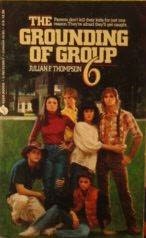
-The Grounding of Group 6 Julian F. Thompson
Why: I have never heard of this book, but it's from the tail end of the first YA wave, and its premise - six teenagers are sent to an academy where there parents have paid for them to be "poisoned and thrown into deep crevasses" - sounds promising enough. Skurnick, writing about this book, calls into focus the prevalence of bad parents in this wave of young adult fiction, something that, while not completely absent from today's YA, has long since been the trend. "So, as ascends Gilmore Girls, so dies a golden YA trope - the parent who deserves to die."


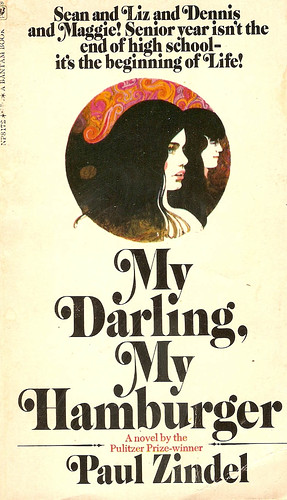
-My Darling, My Hamburger by Paul Zindel
Why: Because 1)It's Paul Zindel, and I still consider The Pigman one of my all-time favorites, 2) I've known of this book for a long time but never even knew what it was about, and 3)Um... the title. Yeah, I'm that simple.


-The Witch of Blackbird Pond by Elizabeth George Spears
Why: One of those books that seems fundamental to a YA reading history, and yet, I haven't read it. I had many, many friends who read it, so I suppose I never felt it necessary to read it too, a mindset I'm all to liable to fall into still.

-Blubber by Judy Blume
Why: Judy Blume is the Queen of YA. The first wave would never have broken quite as hard without her books. As a teenager, I didn't read most of the Blume classics. I read Summer Sisters, her comeback, for adults title while I was in high school, but I haven't read any Blume since then. This one's a short fix, so I should be able to get to it in an afternoon. Mean girl politics, especially those at a pre-teen age, are nothing like what you commonly see on television now.

Okay... fingers crossed that I stay with this one. I'll be making periodic updates to my progress. If you're interested in joining the challenge, check out Booking Mama for more information.

A New Winner!

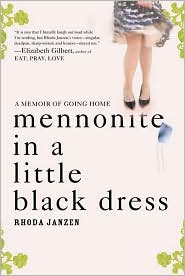
Congratulations to Pricilla! She has won a copy of Rhoda Janzen's Mennonite in a Little Black Dress.

Make sure to visit Pricilla's excellent blog Broken Teepee and send her congratulations.

No worries, friends - If you didn't win this time, I'll be posting another giveaway soon. Thanks to all who entered and special thanks to West of Mars for posting this giveaway and helping to get this fun book into welcoming hands.

Wednesday, October 28, 2009

Review: If You Follow Me

While I was really underwhelmed by the one upcoming Perennial title, Everything Here is the Best Ever, that I picked up at Pub Rep several weeks back, my time has been redeemed: the wasted hour and a half spent with the short story collection has been exchanged by the splendid several hours of reading I had with Malena Watrous's upcoming debut novel, If You Follow Me. So, Harper Perennial, good work. You're still my favorite paperback line from one of my favorite publishers.

A year after her father's suicide, following graduation from college, Marina follows her girlfriend, Carolyn, to Japan to teach English to the students of Shika, a rural Japanese town. Expecting the cliches of urban Japanese life, the two women are surprised by the positives and negatives of living in a Japanese small town. Much of the book is framed around Marina (and Carolyn) consistently failing to follow gomi law, or Japanese garbage law. After each garbage slight against their neighborhood, Marina receives notes from her supervisor, Hiro Miyoshi, who despite his disappointment in her failure to quickly acclimate to the rules of the village, understands her need for defiance and companionship. As the relationship between Marina and Caroyln evolves, collapses, and falls apart, the forces of a foreign land lay their claims to both women, and the culture that was locked out of their two-person house encampment becomes a refuge for Marina, a chance to come to terms with the recent past, the troubling present, and the unknown future.

Whenever I pick up a book about Westerners in Japan, I am usually prepared to put it back down. These "fish out of water" stories are so often flimsy excuses for cultural prejudice and gleaning laughs out of foreign cliche. Japan is the biggest target of them all - it seems that the more vivid a culture, the more likely it is to be skewered and parodied by the Western world. There is, of course, nasty historical reasons why the Japanese have so often been caricatured for American and European nations: mean-spirited propaganda dressed up in a Bugs Bunny cartoon was considered a point scored for Uncle Sam.

I get the historical reasons why such horrible representations exist, but the fact that it so often appears in present day Western pop culture is abhorrent. I was not the only one made uncomfortable by the race relations of Lost in Translation, where one of the protagonists is a recently graduated intellectual American girl, in Japan for an extended stay while her photographer husband travels around for work. Marina and Charlotte (of the movie) have a bit in common - they are similar strangers in similar strange land, except that Marina's perspective on Japan is of a small, rural village, while Lost in Translation bombards its characters with all that is bright and strange and frenzied of Tokyo urban life. I suppose encountering an after-school karaoke club and learning the many terms of gomi law is not quite as an exuberant as what urban Japan would offer, but the real difference between perspectives is that Marina, while striving to do better and frustrated when she does worse, lacks the malaised contempt that seems to drive the characters in Lost in Translastion. While they are careful to be separate entities - the Westerners in Tokyo, Americans traveling abroad - Marina and Carolyn face a a cultural challenge with a genuine attempt at fitting in.

The novel doesn't make easy jokes of its foreign subjects. Marina, quietly giggling at a superior's English pronunciation, still reminds herself that after all the time she's spent in Japan, "I shouldn't still think this is funny."

Gomi law becomes much more than an obstacle for Marina to overcome. It becomes the overwhelming point of her year in Japan - What is to be thrown away? What is to be kept? Where do you put your discarded things? Why do we put them there? What should we do with what is no longer of use to us?

I can recommend If You Follow Me for both its coming of age story and its cultural fairness. I don't strive to make political correctness a requirement in what I read, but in this case, being fair helps to elevate what could have been an episodic tale of Americans in Japan into a heartfelt document of a young woman attempting to get the most out of the new world around her.

Saturday, October 24, 2009

Yes, I'm Behind the Times.
Anyhoo, National Book Award Finalists!

Here in Lonely Reader land, news comes through so frequently, that often times, I'm unable to report on it till the perfect storm of updates dies down. And this being award season, it's difficult to keep up with all the award winners, nominees, finalists, lifetime achievement awards, pie eating contests, etc.

But I'm trying, because as I've written before, I'm a nut for awards stuff. If I can really get to know this year's kids contenders, I would like to start some kind of gambling ring around the Newberry and Caldicott awards. Any librarians/ booksellers/ children's lit enthusiasts out there? Let's start betting now! We don't even have to bet money. Let's bet baked goods. I bet a dozen brownies that
The Evolution of Calpurnia Tate by Jacqueline Kelly is at least a Newberry Honors book. Anyone want to take me on?


The National Book Award Finalists have been announced and, surprise surprise, I haven't read any of the nominated books. Bummer. Not that I read a lot of prestige adult books, but I had read most of last year's finalists for the National Book Award for Young People's Literature. Unlike the somewhat predictable, somewhat mundane choices of the Printz awards and the unreliable quality of the Newberrys - they have to be commended for recognizing Neil Gaiman's The Graveyard Book last year, but they've made a lot of sketchy choices in the past - the National Book Award for Young People's Literature consistently pays focus to books that get ignored elsewhere. Of course, this is really just a personal preference for the award's track record. If you compare last year's National Book Award finalists with this past year's Printz Award finalists, you'll see that both awards have token categories that need to be filled.

These were the 2008 finalists:
- What I Saw and How I Lied by Judy Blundell (winner)
- The Underneath by Kathi Appelt
- Chains by Laurie Halse Anderson
- The Spectacular Now by Tim Tharp
- The Disreputable History of Frankie Landau-Banks E. Lockhart

Printz 2009 finalists:
- Jellicoe Road by Malina Marchetta (winner
- The Astonishing Life of Octavian Nothing, Traitor to the Nation Volume II by MT Anderson
- The Disreputable History of Frankie Landau-Banks by E. Lockhart
- Nation by Terry Pratchett
- Tender Morsels by Margo Lanagan

Each award seems to reserve a spot for a slave narrative, a book focused on black history, or a story of contemporary black culture. There is usually at least one coming of age book. There's usually a survivor tale. There's usually one book written in a non-contemporary time period.

I just think that the National Book Award for Young People's LIterature makes more ecclectic choices, especially with the winner. The Printz nominees from this year were all well, but I don't understand how you pass up four of those contenders for Jellicoe Road, an okay coming-of-age with a distorted narrative that just doesn't work.

In comparison, the NBA from 2008, What I Saw and How I Lied, is that rare WWII book that brings new wealth to an exhausted topic and setting. Blundell was an underdog, due to both her use of period slang and vernacular within text and because this was her first book published under her own name. She had done her time writing Star Wars series novels for kids, and then with the first book that she could really call her own, she wins the National Book Award. You kind of have to love a story like that.

Here is the complete list of National Book Award Finalists - all of them. Believe it or not, I do care about adult literature. I just never have time to read the big books of each year. I'm able to pick up story collections here and there, the odd bit of non-fiction, and occasionally a full novel, but to sit down with expansive, award-geared lit asks too much time than I am capable of giving.

Fiction
Bonnie Jo Campbell, American Salvage (Wayne State University Press)
Colum McCann, Let the Great World Spin (Random House)
Daniyal Mueenuddin, In Other Rooms, Other Wonders (W.W. Norton & Co.)
Jayne Anne Phillips, Lark and Termite (Alfred A. Knopf)
Marcel Theroux, Far North (Farrar, Straus and Giroux)

Nonfiction
David M. Carroll, Following the Water: A Hydromancer's Notebook (Houghton Mifflin Harcourt)
Sean B. Carroll, Remarkable Creatures: Epic Adventures in the Search for the Origins of Species (Houghton Mifflin Harcourt)
Greg Grandin, Fordlandia: The Rise and Fall of Henry Ford's Forgotten Jungle City (Metropolitan Books/Henry Holt)
Adrienne Mayor, The Poison King: The Life and Legend of Mithradates, Rome's Deadliest Enemy (Princeton University Press)
T. J. Stiles, The First Tycoon: The Epic Life of Cornelius Vanderbilt (Alfred A. Knopf)

Poetry
Rae Armantrout, Versed (Wesleyan University Press)
Ann Lauterbach, Or to Begin Again (Viking Penguin)
Carl Phillips, Speak Low (Farrar, Straus & Giroux)
Lyrae Van Clief-Stefanon, Open Interval (University of Pittsburgh Press)
Keith Waldrop, Transcendental Studies: A Trilogy (University of California Press)

Young People’s Literature
Deborah Heiligman, Charles and Emma: The Darwins’ Leap of Faith (Henry Holt)
Phillip Hoose, Claudette Colvin: Twice Toward Justice (Farrar, Straus and Giroux)
David Small, Stitches (W.W. Norton & Co.)
Laini Taylor, Lips Touch: Three Times (Arthur A. Levine Books/Scholastic)
Rita Williams-Garcia, Jumped (HarperTeen/HarperCollins)

Friday, October 23, 2009

Old Giveaway Winner! New Giveaway! Yay!

My work schedule has been crazy, so I have not been able to regularly post. I'm trying to squish blogging time into each day, but it's been difficult, what with being tired and being at work and then being tired and then being at work and tired... But I've still been reading! When I can, which is mostly on public transportation to and from work, on the treadmill at the gym, a little bit in between bites of lunch/dinner, and for the few minutes before my eyes slam shut at night.

Not a whole lot of time to devote, really, which is a shame because there are a ton of great recently released and upcoming books. This morning, I got up early to finish Michelle Cooper's excellent A Brief History of Montmaray, which, given my exhausted self, should tell you something about this book. It's fantastic, perfect for any age - really, I probably say that a lot, and as a devoted reader of children's lit, my credibility is questionable as to recommendations for adult readers, but this one is seriously that good. It's another one of those children's titles that feels instantly classic, like something I would have read in school or from my aimless wanderings through the stacks of my local library. This is a book I would have sprawled with on the library floor or tucked away in one of the cool reading boxes they had in the kids/YA area. Anyway, it made me feel like a twelve year old reader again, and that's a really good feeling.

Anyhoo, the real heart of this post: The winner for the first "Heart is a Lonely Reader" Giveaway. Haley Mathiot has won a copy of Bird in Hand by Christina Baker Kline and a copy of Songs for the Butcher's Daughter by Peter Manseau. Congratulations, Haley!

They will be sent to her by chariot pulled by a quartet of handsome stallions.

...Or, you know, by padded envelope via the US Postal Service.

And thus ends the first giveaway. But don't despair, those who did not win, because I have an all-new giveaway.

Announcing the second Heart is a Lonely Giveaway! Because it's only for one book, this one will run just until the start of November. As of Nov. 1, there will be a winner declared.

Okay, so up for grabs:

Rhoda Janzen's thoughtful and hilarious Mennonite in a Little Black Dress: A Memoir of Going Home. This hardback copy was generously donated by Melissa Weisberg of Macmillan. (As stated in the pub rep edition of my Friday Finds, I love Melissa and think she's just the bee's knees.)

About Mennonite in a Little Black Dress, from Publisher's Weekly:
At first, the worst week of Janzen's life—she gets into a debilitating car wreck right after her husband leaves her for a guy he met on the Internet and saddles her with a mortgage she can't afford—seems to come out of nowhere, but the disaster's long buildup becomes clearer as she opens herself up. Her 15-year relationship with Nick had always been punctuated by manic outbursts and verbally abusive behavior, so recognizing her co-dependent role in their marriage becomes an important part of Janzen's recovery (even as she tweaks the 12 steps just a bit). The healing is further assisted by her decision to move back in with her Mennonite parents, prompting her to look at her childhood religion with fresh, twinkling eyes. (She provides an appendix for those unfamiliar with Mennonite culture, as well as a list of “shame-based foods” from hot potato salad to borscht.) Janzen is always ready to gently turn the humor back on herself, though, and women will immediately warm to the self-deprecating honesty with which she describes the efforts of friends and family to help her re-establish her emotional well-being.


As a side note, several booksellers at the store have read this one, and they have all been similarly engaged with the book. Mainly it's been described for fans of Elizabeth Gilber, Jen Lancaster, etc. That's not much my thing, but this one is a standout in the crowd.

Rules: Just leave a comment, by November 1st, with your name and an email address.

Enter now!

Thanks to West of Mars for helping to promote this giveaway. She's hip, she's cool, and she's local (well, my area local), so check out her site if you haven't already.